Browser gaming didn't just survive the death of Flash — it came back better. This is the short history of how it happened, why modern browser games outpace their Flash predecessors, and where the technology is going next.
The Flash Era (1996–2017)
Adobe Flash (originally Macromedia Flash) was the backbone of browser gaming for nearly two decades. It powered Newgrounds, Miniclip, Kongregate, Armor Games, and hundreds of smaller portals. A generation of developers got their start there — Edmund McMillen (Super Meat Boy, Binding of Isaac), Notch (Minecraft), and dozens more shipped their first hits as Flash games.
At its peak in the 2000s, Flash games were a full-fledged cultural phenomenon. Titles went viral through forum links and school-IT-room gossip. The technology had real limitations — no GPU access, lots of CPU cost per animation frame, security holes — but it was the first time "games in a browser" meant good games in a browser.
The Decline
The turning point was Steve Jobs' 2010 open letter "Thoughts on Flash." He criticized Flash for being closed, insecure, resource-heavy, and fundamentally unsuitable for mobile. Flash wasn't on the iPhone, and eventually it wasn't going to be on Android either. Without mobile, Flash couldn't survive the 2010s.
Adobe announced Flash's end-of-life in 2017 and officially pulled the plug in December 2020. Browsers removed support shortly after. An entire decade of internet culture went dark — most of those Flash games simply stopped working in modern browsers.
The HTML5 Replacement
HTML5, WebGL, and JavaScript replaced Flash gradually over 2015–2022. The new stack had real advantages:
- Open standards. No single vendor controlled the runtime.
- GPU access. WebGL gave browser games direct access to the graphics card for the first time.
- Mobile-native. HTML5 games run the same way on iPhone, Android, and desktop.
- Sandboxed security. No plugin escalation paths.
- No install. Unchanged from Flash's best property.
Modern HTML5 games have graphics that rival mobile apps. Try  Formula Racing Games Car Game for a visual demonstration — that level of polish was structurally impossible in Flash. Or try
 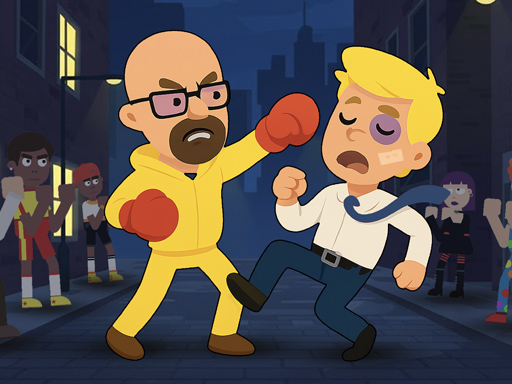 Drunken Fighters for physics-based fidelity that Flash couldn't have run at 60fps.
What Changed About the Games Themselves
Flash games were mostly 2D, mostly single-player, and mostly one-off creative experiments. HTML5 games ship in genres Flash couldn't handle well:
3D racing at smooth framerates — see our racing picks.
Real-time .io multiplayer with dozens of live opponents — Flash couldn't scale networking like this.  Conquer.io wouldn't have existed in Flash.
Mobile-first titles like  Sudoku or
  Two Supra Drifters with touch controls built in from day one.
Persistent progress via localStorage — something Flash had, but HTML5's browser-wide implementation is more reliable.
The Future: WebAssembly, WebGPU, and Beyond
Two technologies are pushing browser gaming toward desktop-parity right now:
WebAssembly (Wasm) lets engines compile C++, Rust, and other languages directly for the browser. Unity, Unreal, and Godot can all target Wasm. Games written for native platforms can ship in browsers with a single build target.
WebGPU is the successor to WebGL. It exposes modern GPU features — compute shaders, better threading — giving browser games access to rendering techniques previously locked to native apps. WebGPU shipped stable in Chrome in 2023 and is now coming to Safari and Firefox.
Flash took browser gaming as far as a plugin-based runtime could go. HTML5 + WebGL + Wasm + WebGPU is taking it further. The no-install convenience that made Flash a cultural force is back — and the games themselves are better.